
Workout for women · 6 exercises · ~8 min
Bladder control routine for women: 6 pelvic floor moves
Pelvic floor exercises are a common part of bladder-control programs. This routine covers the basics: finding the muscle, squeezing in different positions and relaxing it. It is not a treatment.
BeginnerA small ball or pillowAt home8 minutes
The workout
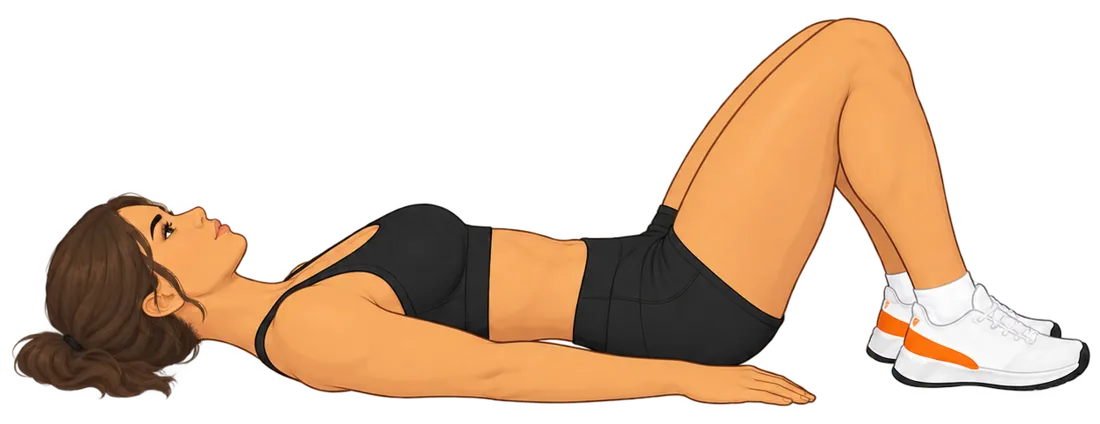
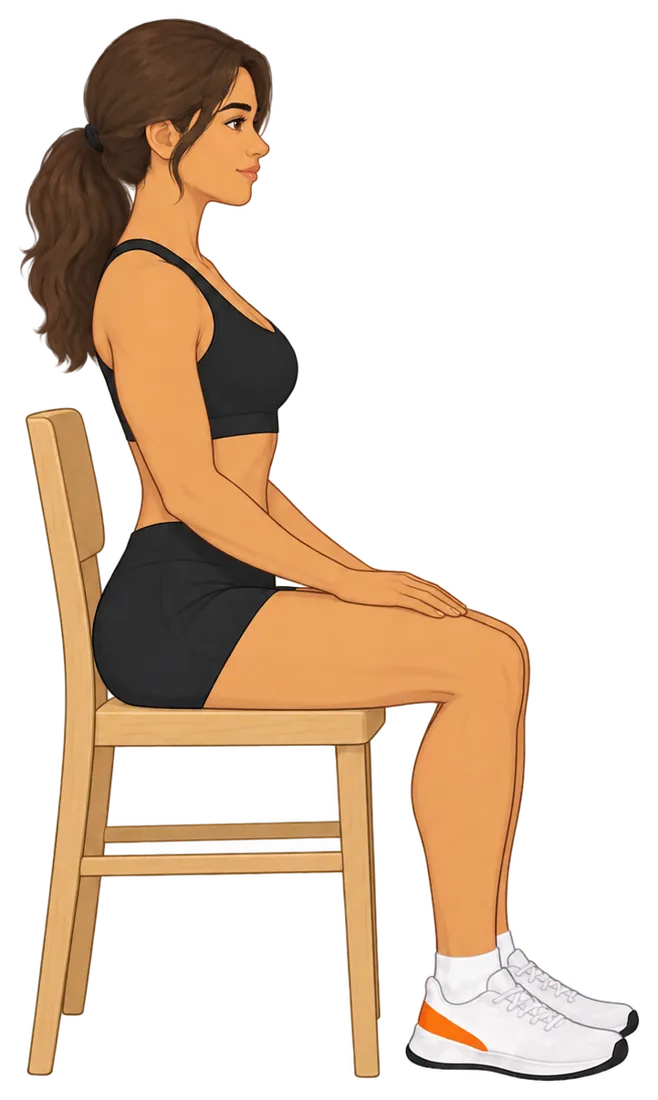

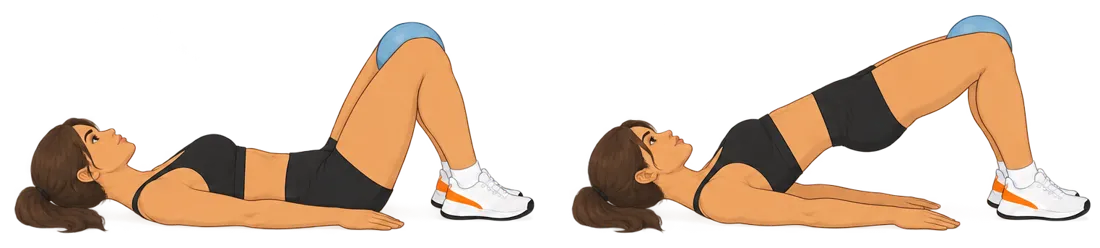
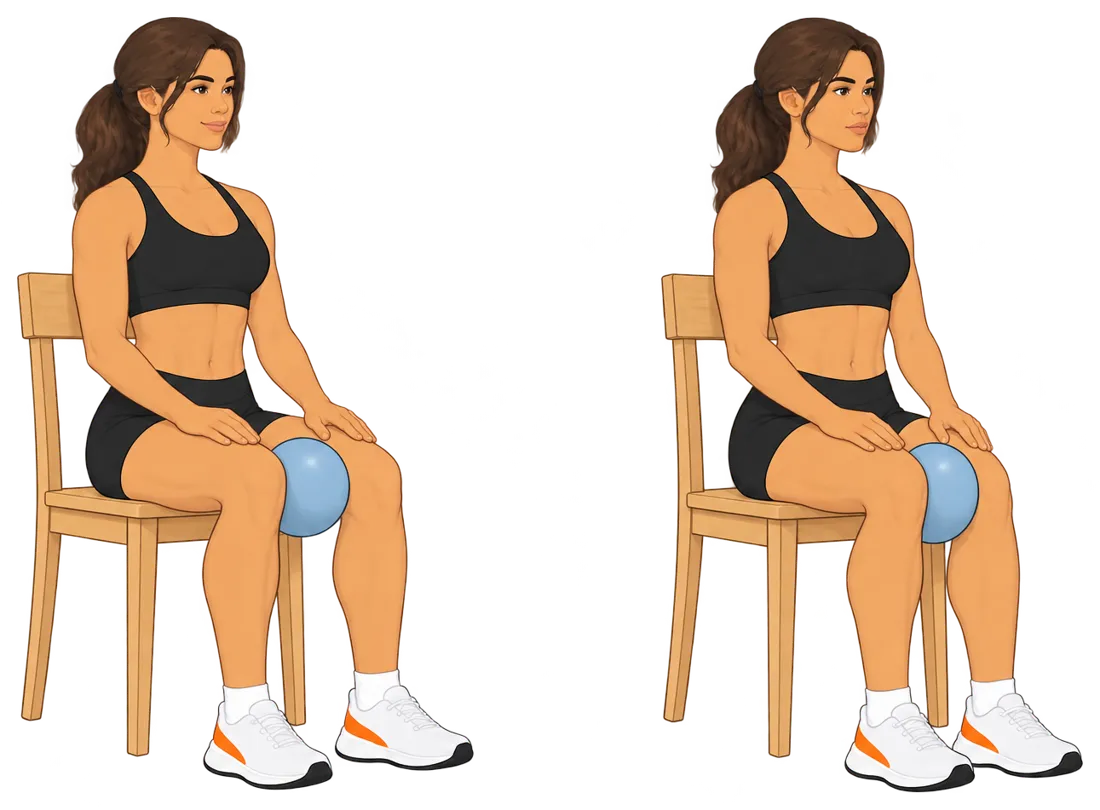
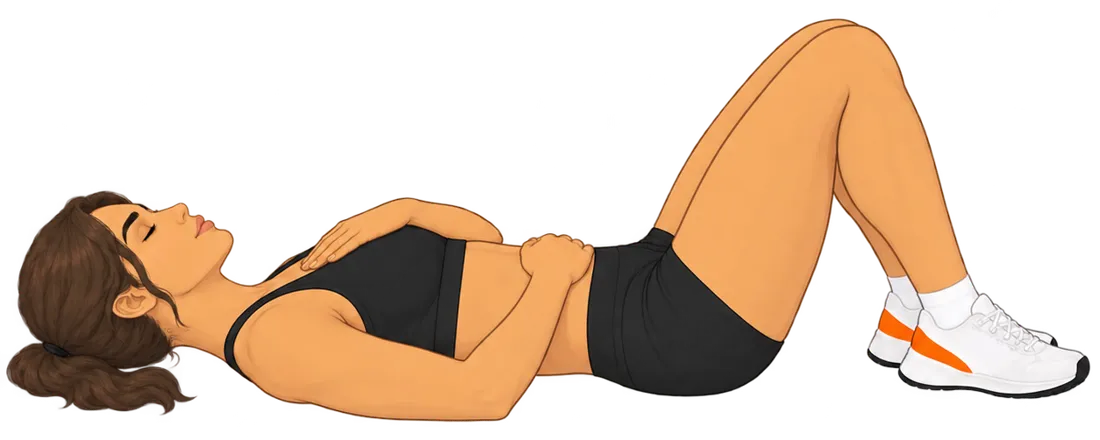
WorksPelvic floor
- Lie on your back, knees bent, feet flat
- Squeeze as if stopping your pee and lift up and in
- Relax fully between reps
Breathe normally. If your belly, glutes or thighs tense up, the squeeze is too hard: go lighter.
WorksPelvic floor
- Sit tall, feet flat
- Squeeze and lift, keep glutes soft
- Breathe normally
Do it on a chair, in a car or at a desk: nobody can see it. Keep your shoulders loose.
WorksPelvic floor
- Stand tall, knees soft
- Squeeze and lift up and in
- Keep your belly and glutes relaxed
The hardest position because gravity works against you. Master the lying version first.
WorksGlutesInner thighsPelvic floor
- Ball or pillow between your knees
- Squeeze the ball and lift
- Hold 2 s at the top
No ball? Use a pillow or a rolled-up towel between your knees.
WorksInner thighsPelvic floor
- Sit tall, ball between knees
- Squeeze ball + pelvic floor
- Hold 5 s, relax
No ball? A rolled-up towel or a pillow works too.
WorksDiaphragmPelvic floor
- One hand on your belly
- Inhale: belly rises, floor relaxes
- Exhale: gentle lift
Let the pelvic floor soften on the inhale. This is as important as the squeeze.
How to do this routine
- Do the moves in order, once through.
- Rest about 30 seconds between moves.
- If you leak urine or feel pain, see a doctor or a pelvic floor physiotherapist; exercises alone may not be enough.
- Three to four times a week is a good start; quality beats speed.
Time your Kegels with Kegel Morse Hero
The app guides each squeeze and release with a ring and haptics, so you can train the Kegel part of this routine eyes-free. No account, no ads.
Download on theApp StoreGet it onGoogle PlayNot medical advice. Stop if anything hurts. If you have pain, leaking or other symptoms, or have had pelvic surgery, see a doctor or a pelvic floor physiotherapist first. Medical disclaimer.