
Exercise · 1–2 min
Belly Breathing: how to do it (with pictures)
Slow breaths into the belly.
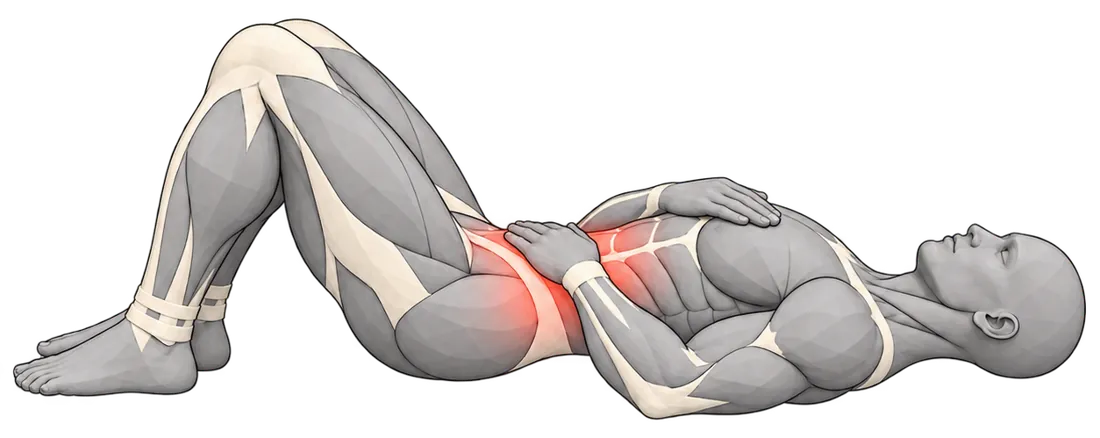
WorksDiaphragmPelvic floor
Belly breathing links the diaphragm, your main breathing muscle, with the pelvic floor. As you inhale, the pelvic floor softens and lowers a little; as you exhale, it rises. Learning to let it relax matters as much as learning to squeeze.
How to do it
- One hand on your belly
- Inhale: belly rises, floor relaxes
- Exhale: gentle lift
Let the pelvic floor soften on the inhale. This is as important as the squeeze.
How to know it is working
On the inhale, the hand on your belly rises and the base of the pelvis feels like it widens and softens. On the exhale, the belly falls and you may notice a light lift inside. Shoulders, neck and jaw stay relaxed. Avoid chest-only breathing, forcing the belly out or straining.
Common mistakes
- Breathing only into the upper chest. Keep one hand on your belly and one on your chest. The lower hand should move more, with the ribs widening sideways.
- Pushing the belly out hard. Let the breath arrive on its own. Forcing it pushes down on the pelvic floor instead of letting it soften.
- Breathing too fast or too deep. Keep a slow, comfortable pace. If you feel dizzy, take smaller breaths and rest.
Make it easier or harder
Easier: Lie on your back with knees bent and a pillow under your head, and do a few breaths at a time.
Harder: Add a gentle Kegel on each exhale and a full release on each inhale. Practice sitting or standing too.
Who it helps
Everyone, especially people with a tense pelvic floor, pelvic pain or stress, and people after childbirth once cleared. Lifters can use it to learn breath control.
Skip it or get checked first if
This is gentle and suits most people. If you feel dizzy, short of breath or anxious, return to normal breathing, and talk to a doctor if a lung or heart condition affects your breathing. Stop if it hurts.
Questions
How does breathing affect the pelvic floor?
The diaphragm and pelvic floor move together like a piston. Inhale and the pelvic floor lowers and relaxes; exhale and it rises.
Can breathing help a tight pelvic floor?
Slow belly breathing can help the muscles let go, often the first step for a pelvic floor that is too tight. Relax first rather than squeezing more, and see a pelvic floor physiotherapist if symptoms persist.
In these workouts
For men
- Kegel Exercises for Men: 5-Minute Daily Routine
- Pelvic Floor Exercises for Men Over 40
- Gentle Pelvic Floor Routine for Men Over 50
- Pelvic Floor Workout for Lifters: Before Heavy Squats
- Last Longer Routine for Men: 6 Pelvic Floor Moves
For women
- Pelvic Floor Exercises for Women: 5-Minute Daily Routine
- Evening Pelvic Floor Routine for Women: Calm Moves Before Bed
- Pelvic Floor Exercises for Women Over 40
- Pelvic Floor Exercises for Women Over 50: Gentle Routine
- Postpartum Pelvic Floor Exercises: Gentle First Routine
- Bladder Control Routine for Women: 6 Pelvic Floor Moves
- Pelvic Floor Stretches for Women: Relax and Release
- Yoga-Style Pelvic Floor Routine for Women
Time your Kegels with Kegel Morse Hero
The app guides each squeeze and release with a ring and haptics, so you can train the Kegel part of this routine eyes-free. No account, no ads.
Download on theApp StoreGet it onGoogle PlayNot medical advice. Stop if anything hurts. If you have pain, leaking or other symptoms, or have had pelvic surgery, see a doctor or a pelvic floor physiotherapist first. Medical disclaimer.