
Exercise · 10 reps · 5 s hold
Kegel (standing): how to do it (with pictures)
Hardest: fight gravity.
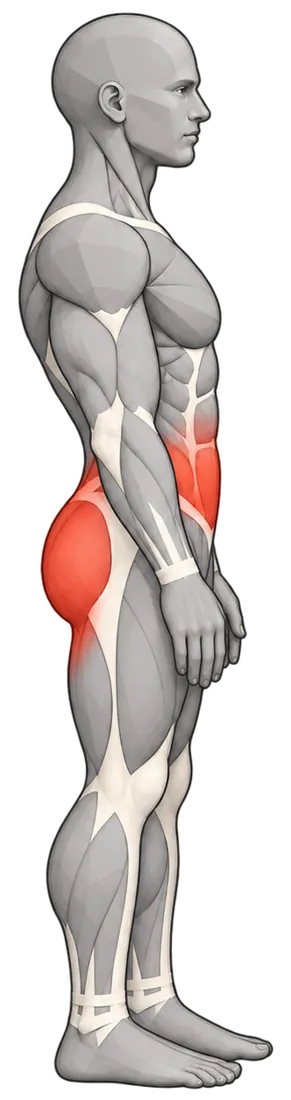
WorksPelvic floor
The standing Kegel trains the pelvic floor where it has to work in real life. Upright, the muscles lift against gravity and the weight of the organs above them, so this is the hardest version. It bridges lying practice and moments like coughing, lifting or standing up.
How to do it
- Stand tall, knees soft
- Squeeze and lift up and in
- Keep your belly and glutes relaxed
The hardest position because gravity works against you. Master the lying version first.
How to know it is working
You should feel a lift up and in from the base of the pelvis, then a full release, while legs, glutes and belly stay quiet. Knees stay soft and weight stays even on both feet. Watch for pushing down, breath holding or locked knees. If your hips tuck under or heels rise, other muscles took over.
Common mistakes
- Locked knees and a tucked pelvis. Unlock the knees and keep a neutral spine, weight over the middle of your feet.
- Moving to standing too early. If holds fade or your glutes clench, go back to lying or sitting and build there first.
- Gripping hard and forgetting to let go. Use a moderate effort you can keep for the whole hold, then relax fully before the next rep.
Make it easier or harder
Easier: Hold a chair back or lean on a wall, and start with 2 to 3 second holds.
Harder: Squeeze just before a cough, sneeze or lifting a bag, or add it to a slow sit-to-stand.
Who it helps
Runners, cyclists, lifters and anyone who leaks a little when coughing or jumping. Men with dribbling after urinating may find a squeeze after peeing helpful.
Skip it or get checked first if
If you feel heaviness or bulging in the vagina or pelvis, see a doctor or pelvic floor physiotherapist before adding load. The same goes for pelvic pain, recent surgery, a recent birth or an overactive pelvic floor, where relaxation comes first. Stop if it hurts.
Questions
Why are standing Kegels harder?
Standing puts your full body weight above the pelvic floor, so it lifts against more load while your legs and trunk keep you balanced.
Should I squeeze before I cough or lift?
A quick, gentle squeeze just before a cough, sneeze or lift is a common technique that may help reduce small leaks. Practice it lying and sitting first.
In these workouts
For men
- Kegel Exercises for Men: 5-Minute Daily Routine
- Morning Pelvic Floor Workout for Men: 6 Moves
- Kegel Exercises at Your Desk: Office Routine for Men
- Pelvic Floor Exercises for Runners and Cyclists
- Last Longer Routine for Men: 6 Pelvic Floor Moves
For women
Time your Kegels with Kegel Morse Hero
The app guides each squeeze and release with a ring and haptics, so you can train the Kegel part of this routine eyes-free. No account, no ads.
Download on theApp StoreGet it onGoogle PlayNot medical advice. Stop if anything hurts. If you have pain, leaking or other symptoms, or have had pelvic surgery, see a doctor or a pelvic floor physiotherapist first. Medical disclaimer.