
Exercise · 10 each side
Supine March: how to do it (with pictures)
Lift bent knees one at a time.
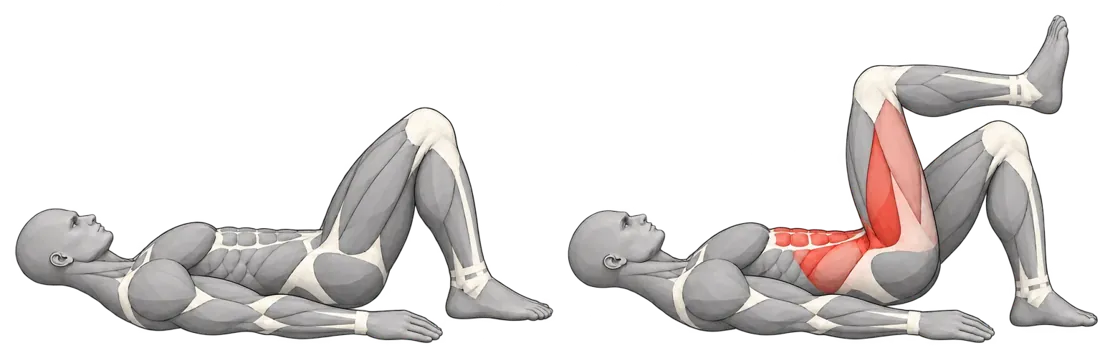
WorksLower abdominalsHip flexors
The supine march is a lying move where you lift one bent knee and lower it, then switch. It trains the lower abdominals to keep the pelvis steady while each leg moves, a skill used in walking and climbing stairs. It is a gentle step up from heel slides.
How to do it
- Lie on your back, knees bent
- Lift one knee to 90°
- Lower slowly, switch
How to know it is working
You should feel your lower belly working quietly and the front of the hip lifting the leg. Your lower back, pelvis and the planted foot stay still. Breathe out as you lift and in as you lower. Watch for breath holding, belly bulging or pushing down into the pelvis. Self-check: hands on your hip bones should not tip as the knee rises.
Common mistakes
- Dropping the leg quickly. Lower slowly and touch down softly. The lowering is where the control comes from.
- Arching your lower back as the knee lifts. Keep your ribs down and lightly draw in the lower belly. Lift less if your back still arches.
- Pressing hard into the floor with the other foot. Keep that foot relaxed. Pushing hard means your glutes and back are taking over.
Make it easier or harder
Easier: Lift the foot only an inch, or practice heel slides until the movement feels steady.
Harder: Pause with the knee at 90 degrees for 2 to 3 seconds, slow the lowering, or add a gentle Kegel as you lift.
Who it helps
People over 50, beginners and anyone who wants a low-impact morning core move.
Skip it or get checked first if
After abdominal surgery, with a hernia or with separated abdominal muscles, check with your doctor or physiotherapist first. If you notice belly doming, pelvic heaviness or back pain, make the move smaller or rest. Stop if it hurts.
Questions
What is the difference between a supine march and heel slides?
In heel slides the foot stays on the floor. In the supine march it lifts off, so the lower abdominals carry more of the leg's weight.
Is the supine march a pelvic floor exercise?
It mainly trains the lower abdominals and hip flexors, which work with the pelvic floor to steady the pelvis. You can add a gentle Kegel on each lift, but keep doing Kegels on their own too.
In these workouts
For men
For women
Time your Kegels with Kegel Morse Hero
The app guides each squeeze and release with a ring and haptics, so you can train the Kegel part of this routine eyes-free. No account, no ads.
Download on theApp StoreGet it onGoogle PlayNot medical advice. Stop if anything hurts. If you have pain, leaking or other symptoms, or have had pelvic surgery, see a doctor or a pelvic floor physiotherapist first. Medical disclaimer.