
Exercise · 8 each side
Single-Leg Bridge: how to do it (with pictures)
One foot down, one leg up.
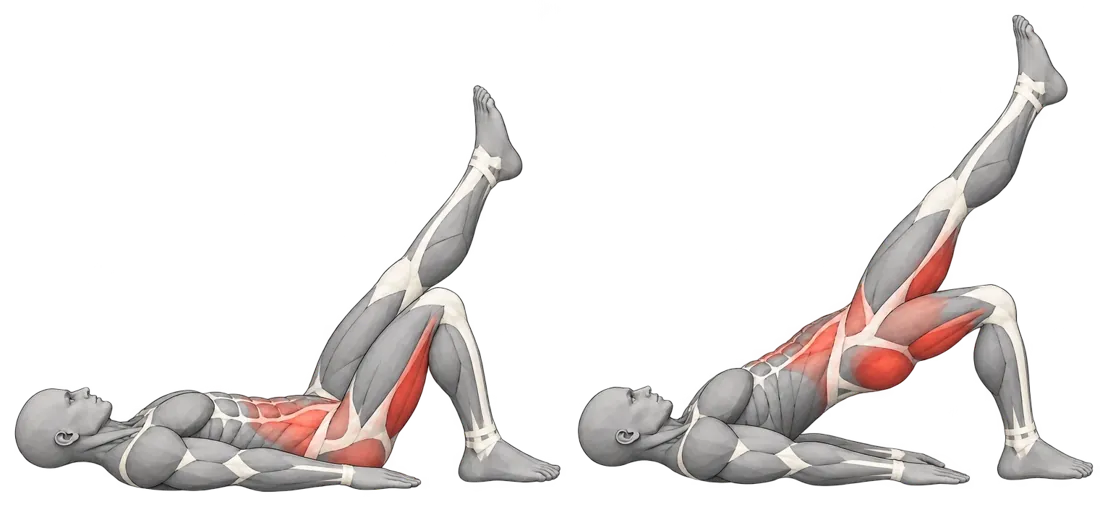
WorksGlutesHamstringsDeep core
The single-leg bridge keeps one foot down while the other leg lifts. Each side carries the full load and must keep the pelvis level, which builds the hip strength and control used in running and cycling. It supports the pelvis rather than training the pelvic floor directly.
How to do it
- One leg straight in the air
- Push through the planted heel
- Keep hips level
How to know it is working
You should feel the glute and hamstring of the planted leg working, and your deep core stopping your hips from tipping. Imagine your pelvis as a tray you do not want to spill. Avoid breath holding, arching your lower back or hamstring cramps. Self-check: with hands on your hip bones, both should stay at the same height.
Common mistakes
- The lifted side dropping. Lift only as high as you can keep both hips level. A lower, level bridge beats a high, tilted one.
- Pushing through the toes of the planted foot. Drive through the heel and keep that knee in line with hip and foot.
- Rushing the reps. Lift and lower at a slow, even pace, and rest briefly between sides.
Make it easier or harder
Easier: Keep the lifted leg bent, or do a regular bridge with your weight shifted toward one foot.
Harder: Pause 3 seconds at the top, lower slowly, or put the planted foot on a low step. A gentle Kegel at the top adds another layer.
Who it helps
Runners, cyclists and anyone who has mastered the two-leg bridge and wants more hip strength and side-to-side balance.
Skip it or get checked first if
Skip if a regular bridge still causes back pain, or with hip, knee or hamstring pain on the working side. After recent surgery, a recent birth or with a hernia, check with your doctor or physiotherapist first. Stop if it hurts.
Questions
Is the single-leg bridge good for runners?
Running lands on one leg at a time, and this move trains each hip on its own the same way. It is a common choice for glute strength and pelvic control.
Why does one side feel weaker?
Most people have a stronger side. Do equal reps on both, starting with the weaker one so you do not shortchange it.
In these workouts
For men
For women
Time your Kegels with Kegel Morse Hero
The app guides each squeeze and release with a ring and haptics, so you can train the Kegel part of this routine eyes-free. No account, no ads.
Download on theApp StoreGet it onGoogle PlayNot medical advice. Stop if anything hurts. If you have pain, leaking or other symptoms, or have had pelvic surgery, see a doctor or a pelvic floor physiotherapist first. Medical disclaimer.