
Exercise · 15–30 s each side
Side Plank: how to do it (with pictures)
Hips up on one forearm.
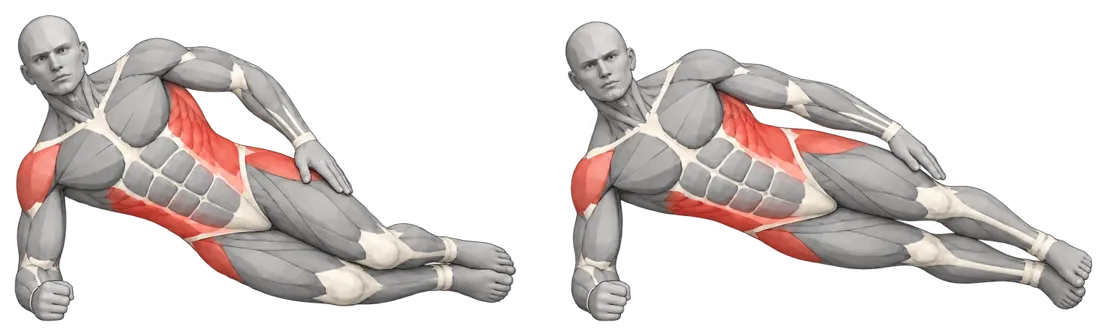
WorksObliquesSide glutes
The side plank is a held position on one forearm with your body sideways. It trains the obliques along your waist and the side glutes that steady your pelvis. It supports the pelvis from the sides rather than training the pelvic floor, and it should be done with normal breathing.
How to do it
- Elbow under shoulder
- Lift hips into a straight line
- Knees down = easier
How to know it is working
You should feel the side of your waist and the outer hip of the bottom leg working. You should not feel your shoulder sink, your neck strain, your breath stop or pressure in the pelvis. Check that your top hip stays stacked over the bottom one, not rolled forward. When your hips start to drop, end the hold.
Common mistakes
- Sinking into the shoulder. Push the floor away with your forearm so the shoulder stays strong and the neck stays long.
- Hips sagging toward the floor. Lift them until your body is straight from head to knees or feet. Shorter holds help keep the line.
- Rolling the top hip forward or back. Stack hips and shoulders as if your back were against a wall.
Make it easier or harder
Easier: Keep both knees bent and down, or do it standing with your forearm on a wall and feet stepped out.
Harder: Straighten both legs and stack the feet, add a few slow hip dips, or lift the top leg slightly for a few seconds.
Who it helps
Good for runners, lifters and anyone wanting stronger hips and waist, as long as effort causes no pelvic symptoms.
Skip it or get checked first if
Use the knee or wall version, or skip it, if you have shoulder pain, prolapse symptoms, leaking during effort, a hernia, or recent abdominal or pelvic surgery. If you are pregnant or recently gave birth, ask a doctor or pelvic floor physiotherapist first. Stop if it hurts.
Questions
What does the side plank work?
Mainly the obliques, the deep side abdominals and the side glutes of the bottom leg, plus the supporting shoulder.
Is the knee version still useful?
Yes. It trains the same muscles with less load and is the right choice until you can hold a straight line with legs extended.
In these workouts
For men
For women
Time your Kegels with Kegel Morse Hero
The app guides each squeeze and release with a ring and haptics, so you can train the Kegel part of this routine eyes-free. No account, no ads.
Download on theApp StoreGet it onGoogle PlayNot medical advice. Stop if anything hurts. If you have pain, leaking or other symptoms, or have had pelvic surgery, see a doctor or a pelvic floor physiotherapist first. Medical disclaimer.