
Exercise · 8 each side
Reverse Lunge: how to do it (with pictures)
Step back, lower, push up.
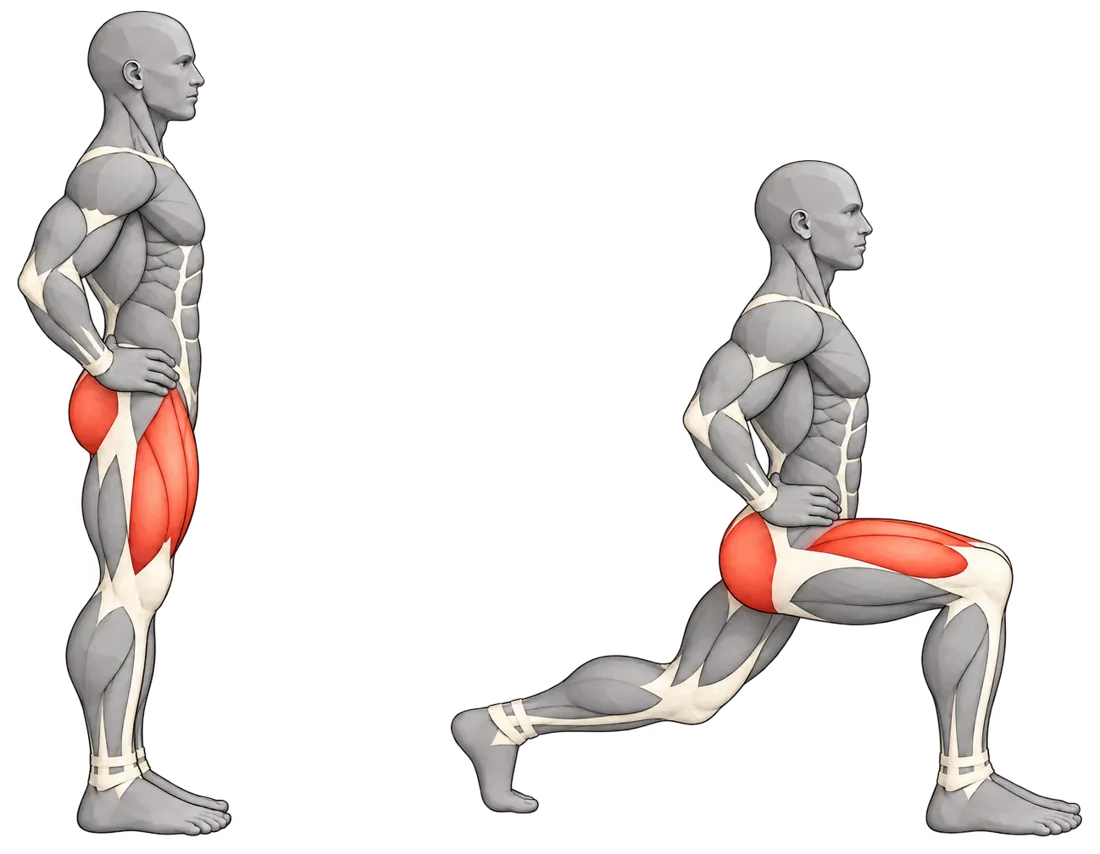
WorksGlutesThighs
The reverse lunge is a single-leg move: step back, lower the back knee, push up through the front heel. It builds glute and thigh strength and one-leg balance, which keeps the pelvis steady when you run or climb stairs. It supports the area around the pelvic floor rather than training it directly.
How to do it
- Step one foot back
- Lower the back knee
- Push through the front heel
How to know it is working
The front glute and thigh do most of the work, with a light stretch at the front of the back hip. Your torso stays tall and your pelvis level. You should not feel knee pain, your lower back arching or breath holding as you push up. Self-check: you can pause at the bottom for a second without wobbling.
Common mistakes
- Pushing off the back foot. Drive through the front heel to stand. The back foot is mostly there for balance.
- Front knee caving inward. Keep the front knee over the middle of your foot. Slow down if it wobbles.
- Holding your breath as you stand. Breathe in as you lower and out as you push up, so the pelvic floor can lift with the effort.
Make it easier or harder
Easier: Hold a wall or chair, take a shorter step and lower only partway. You can also do 4–5 reps each side.
Harder: Lower over three seconds, pause just above the floor or hold weights at your sides. You can also add a gentle Kegel lift as you rise and fully release at the bottom.
Who it helps
Useful for runners, cyclists and lifters, and anyone who wants better balance and hip control on one leg.
Skip it or get checked first if
Skip or modify it if you have knee, hip or groin pain, balance problems, a hernia, recent pelvic or abdominal surgery, or are pregnant or postpartum and not yet cleared. Leaking or heaviness when you lunge is a reason to see a pelvic floor physiotherapist. Stop if it hurts.
Questions
Why reverse lunges instead of forward lunges?
Stepping back is usually easier on the knees and easier to control, because your weight stays over the front foot. That makes it a good starting point.
Are lunges good for the pelvic floor?
They strengthen the muscles that steady the pelvis, which can support the pelvic floor. They do not replace Kegels.
In these workouts
For men
- Pelvic Floor Workout for Lifters: Before Heavy Squats
- Pelvic Floor Exercises for Runners and Cyclists
For women
Time your Kegels with Kegel Morse Hero
The app guides each squeeze and release with a ring and haptics, so you can train the Kegel part of this routine eyes-free. No account, no ads.
Download on theApp StoreGet it onGoogle PlayNot medical advice. Stop if anything hurts. If you have pain, leaking or other symptoms, or have had pelvic surgery, see a doctor or a pelvic floor physiotherapist first. Medical disclaimer.