
Exercise · 20–40 s
Plank: how to do it (with pictures)
Straight line on forearms.
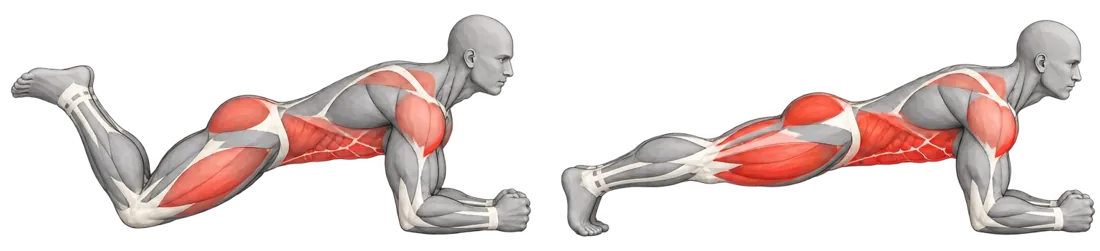
WorksAbdominalsGlutesShoulders
The forearm plank is a held position with your body in a straight line from head to heels. It trains the abdominals, glutes and shoulders to work together. It raises pressure inside the abdomen, so in a pelvic floor routine the key skill is holding it while breathing and without pushing down.
How to do it
- Elbows under shoulders
- Squeeze glutes, brace your belly
- Keep breathing
If the full version is too hard, drop to your knees. A clean short hold beats a sagging long one.
How to know it is working
You should feel your belly and glutes working and your shoulders steady over your elbows. You should not feel your lower back ache, your breath stop, or heaviness, pressure or leaking in the pelvis. If you can say a short sentence while holding, your breathing is fine. Downward pressure in the pelvis means the full plank is too hard for now.
Common mistakes
- Holding your breath to last longer. Breathe slowly the whole time. If you cannot, end the hold early.
- Hips piked high in the air. Lower the hips until shoulders, hips and heels line up. A phone video helps you check.
- Bearing down to keep the belly tight. Brace by gently drawing the lower belly in and up. Never strain or push into the pelvis.
Make it easier or harder
Easier: Plank on your knees or with your forearms on a bench. Several 10-second holds are fine.
Harder: Add time in small steps, lift one foot for a few seconds, or add a gentle Kegel while you breathe, then fully relax.
Who it helps
Good for people without pelvic symptoms who want a stronger trunk, including lifters, runners and anyone who lifts things in daily life.
Skip it or get checked first if
Modify or skip the full plank if you have prolapse symptoms, leaking during effort, a hernia, doming along the middle of the belly, or recent abdominal or pelvic surgery. If you are pregnant or recently gave birth, ask a doctor or pelvic floor physiotherapist first. Stop if it hurts.
Questions
Is plank bad for the pelvic floor?
Not for most people, but it raises abdominal pressure. If you feel heaviness or leak, switch to a knee or incline plank and get checked.
Should I squeeze my pelvic floor during a plank?
A gentle lift is fine if you can keep breathing. Do not clench hard the whole time, and relax fully afterwards.
In these workouts
For men
For women
Time your Kegels with Kegel Morse Hero
The app guides each squeeze and release with a ring and haptics, so you can train the Kegel part of this routine eyes-free. No account, no ads.
Download on theApp StoreGet it onGoogle PlayNot medical advice. Stop if anything hurts. If you have pain, leaking or other symptoms, or have had pelvic surgery, see a doctor or a pelvic floor physiotherapist first. Medical disclaimer.