
Exercise · 10 marches
Bridge March: how to do it (with pictures)
Hold the bridge, march.
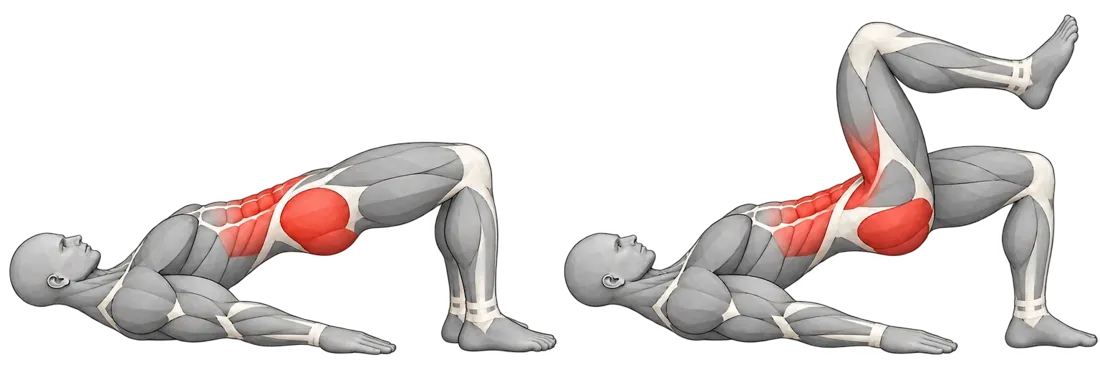
WorksGlutesDeep core
The bridge march starts as a regular bridge, then you lift one foot and the other while your hips stay up. Each lift shifts the load to one side, so your glutes and deep core must stop the pelvis from dropping or twisting. It builds the stable base the pelvis needs for walking, lifting and training.
How to do it
- Lift into a bridge
- Lift one foot, then the other
- Hips don't drop
How to know it is working
You should feel both glutes working, with extra effort in the standing leg each time a foot lifts. Your belly feels gently braced and your hips stay high and level. Watch for breath holding, an arched lower back or pushing down into the pelvis. If your hips sink or rock with each step, make the march smaller.
Common mistakes
- Lifting the knee too high. Raise the foot an inch or two at first. The goal is a steady pelvis, not a big leg movement.
- Holding your breath through the set. Breathe out as each foot lifts and in as it comes down. Keep the rhythm slow.
- Letting the bridge sag. If your hips drop, lower down, rest and restart with fewer marches.
Make it easier or harder
Easier: Lift only the heel, keeping the toes down, or rest after every two marches.
Harder: Pause with one foot up for 2 to 3 seconds, straighten the lifted leg, or slow each march.
Who it helps
Lifters and anyone working on core and hip control, especially once a plain bridge feels easy.
Skip it or get checked first if
Scale back or skip with back pain during bridges, hip pain, a hernia or recent abdominal surgery. If you notice bulging along the middle of your belly, pelvic heaviness or leaking during the move, get checked by a physiotherapist. Stop if it hurts.
Questions
What does the bridge march work?
The glutes and hamstrings, plus the deep core muscles that keep the pelvis level, one side at a time.
Should my hips stay perfectly still?
Aim for as little movement as you can manage. A small wobble is normal at first, but a big drop means it is too hard for now.
In these workouts
For men
- Pelvic Floor Workout for Lifters: Before Heavy Squats
- Core and Pelvic Floor Workout for Men: No Equipment
For women
Time your Kegels with Kegel Morse Hero
The app guides each squeeze and release with a ring and haptics, so you can train the Kegel part of this routine eyes-free. No account, no ads.
Download on theApp StoreGet it onGoogle PlayNot medical advice. Stop if anything hurts. If you have pain, leaking or other symptoms, or have had pelvic surgery, see a doctor or a pelvic floor physiotherapist first. Medical disclaimer.