
Exercise · 12 reps
Bodyweight Squat: how to do it (with pictures)
Lower down, rise back up.
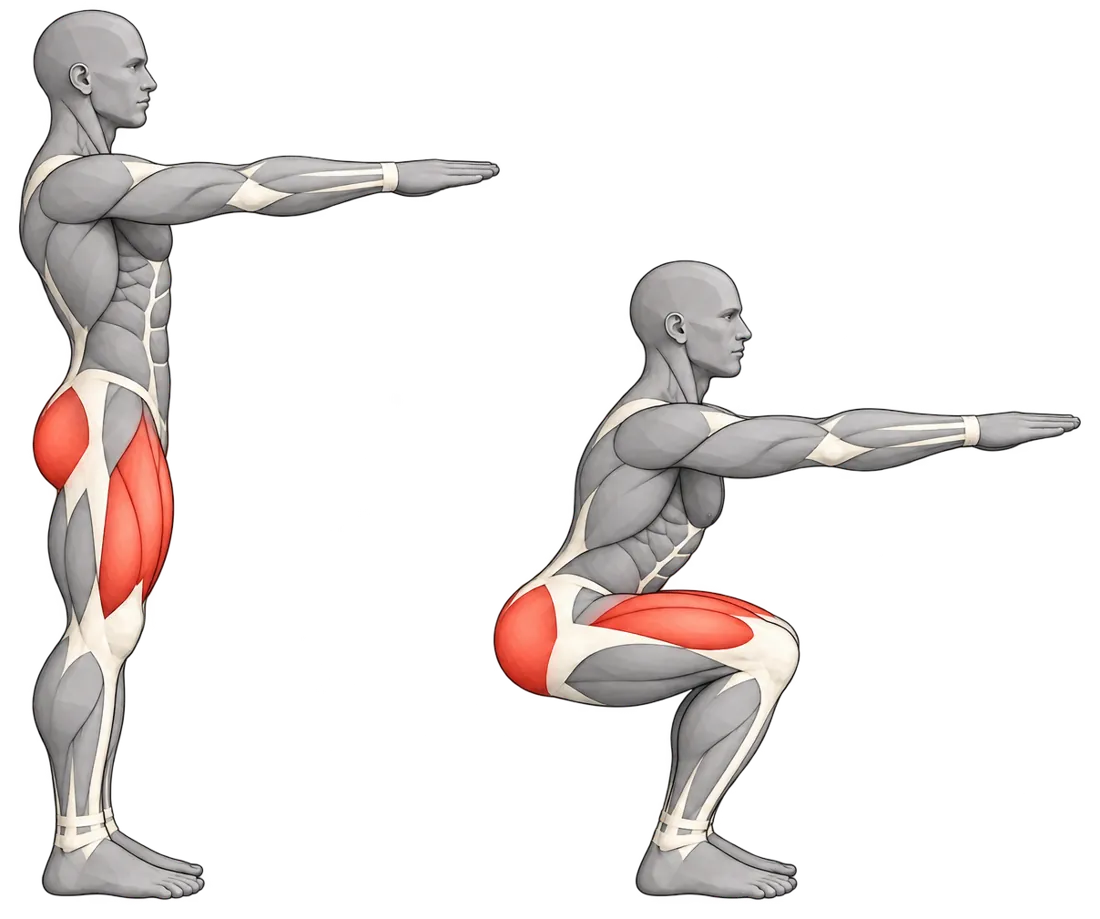
WorksGlutesThighs
The bodyweight squat trains your glutes and thighs, the big muscles that support your pelvis. It is not a pelvic floor exercise on its own, but breathing matters: exhaling as you stand helps the pelvic floor lift with the effort instead of being pushed down.
How to do it
- Feet shoulder-width apart
- Sit back, chest up
- Exhale and lift as you stand
How to know it is working
You should feel your thighs and glutes working, especially as you rise, breathing in on the way down and out as you stand. You should not feel your lower back taking over, heaviness down below or an urge to hold your breath and push. Self-check: if you leak or strain, make the squat smaller and focus on the exhale.
Common mistakes
- Holding your breath on the way up. Breathe out as you stand. Breath holding raises pressure on the pelvic floor.
- Knees caving inward. Keep your knees in line with your toes. Imagine spreading the floor apart with your feet.
- Going deeper than you can control. Squat only as low as you can with your chest up and heels down. Depth comes with practice.
Make it easier or harder
Easier: Squat to a chair and touch it lightly before standing, or hold a counter. You can also do 6–8 reps.
Harder: Lower over three or four seconds, pause at the bottom, or add a gentle Kegel lift as you stand and release it fully at the top.
Who it helps
Useful for beginners, desk workers and drivers who need strong legs and hips, and anyone easing back into exercise.
Skip it or get checked first if
Get checked first if you have knee or hip pain, a hernia, recent abdominal or pelvic surgery, prolapse symptoms such as heaviness, or are pregnant or postpartum and not yet cleared. Leaking during squats is worth raising with a pelvic floor physiotherapist. Stop if it hurts.
Questions
Are squats good for the pelvic floor?
They strengthen the muscles around the pelvis, which can support the pelvic floor. They do not replace Kegels, but breathing out as you stand helps the pelvic floor work with the movement.
Why do I leak when I squat?
Pressure may be beating the pelvic floor, often from breath holding or going too heavy too soon. Try smaller squats with a steady exhale, and get checked if it continues.
In these workouts
For men
- Pelvic Floor Exercises for Men: 6-Move Beginner Routine
- Morning Pelvic Floor Workout for Men: 6 Moves
- Kegel Exercises at Your Desk: Office Routine for Men
- Pelvic Floor Exercises for Long Drives: Routine for Drivers
For women
Time your Kegels with Kegel Morse Hero
The app guides each squeeze and release with a ring and haptics, so you can train the Kegel part of this routine eyes-free. No account, no ads.
Download on theApp StoreGet it onGoogle PlayNot medical advice. Stop if anything hurts. If you have pain, leaking or other symptoms, or have had pelvic surgery, see a doctor or a pelvic floor physiotherapist first. Medical disclaimer.