
Exercise · 8 each side
Bird Dog: how to do it (with pictures)
Reach opposite arm and leg.
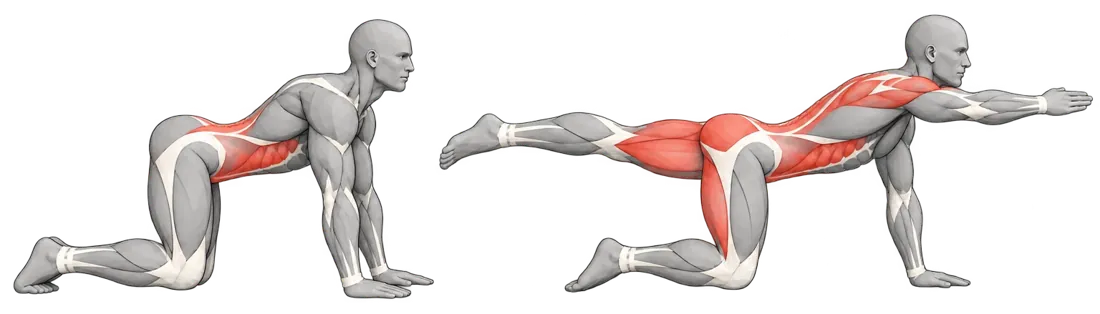
WorksBack musclesGlutesDeep core
The bird dog is done on hands and knees: you reach one arm forward and the opposite leg back while keeping your trunk still. It trains the back muscles, glutes and deep core to hold the spine and pelvis steady. It supports the pelvic floor rather than training it directly.
How to do it
- Hands under shoulders, knees under hips
- Reach opposite arm and leg long
- Keep your back flat
How to know it is working
You should feel your back muscles and the glute of the lifted leg working, with a steady low effort in your belly. You should not feel your lower back sag, your hips twist or your neck strain. Imagine a cup of water on your lower back: if it would spill as you reach, the arm or leg is going too high.
Common mistakes
- Lifting the leg too high and arching the back. Reach the leg back, not up, and stop at hip height so the lower back stays flat.
- Shifting the hips toward the standing leg. Keep weight even and hips square to the floor. Shorten the reach if they tip.
- Holding your breath while reaching. Breathe out as you reach and breathe in as you return.
Make it easier or harder
Easier: Move only the leg or only the arm, keeping the other three points down, or slide the leg back along the floor.
Harder: Hold the reach for five seconds, move more slowly, or add a gentle Kegel on the exhale followed by full relaxation.
Who it helps
Useful for desk workers with a stiff back, people over 40, lifters who want a stable trunk, and anyone who needs low-impact core work.
Skip it or get checked first if
If your wrists hurt, use fists or forearms. Check with a doctor or physiotherapist first if you have acute back pain, recent abdominal or pelvic surgery, or knees that hurt when kneeling. Stop if it hurts.
Questions
Is the bird dog good for lower back pain?
It is often used in back rehab because it trains stability with little load on the spine. If you have pain, ask a physiotherapist whether it suits you.
How long should I hold each bird dog?
Start with a one or two second pause and build to five seconds once your back stays flat.
In these workouts
For men
- Pelvic Floor Exercises for Men: 6-Move Beginner Routine
- Morning Pelvic Floor Workout for Men: 6 Moves
- Core and Pelvic Floor Workout for Men: No Equipment
For women
Time your Kegels with Kegel Morse Hero
The app guides each squeeze and release with a ring and haptics, so you can train the Kegel part of this routine eyes-free. No account, no ads.
Download on theApp StoreGet it onGoogle PlayNot medical advice. Stop if anything hurts. If you have pain, leaking or other symptoms, or have had pelvic surgery, see a doctor or a pelvic floor physiotherapist first. Medical disclaimer.