
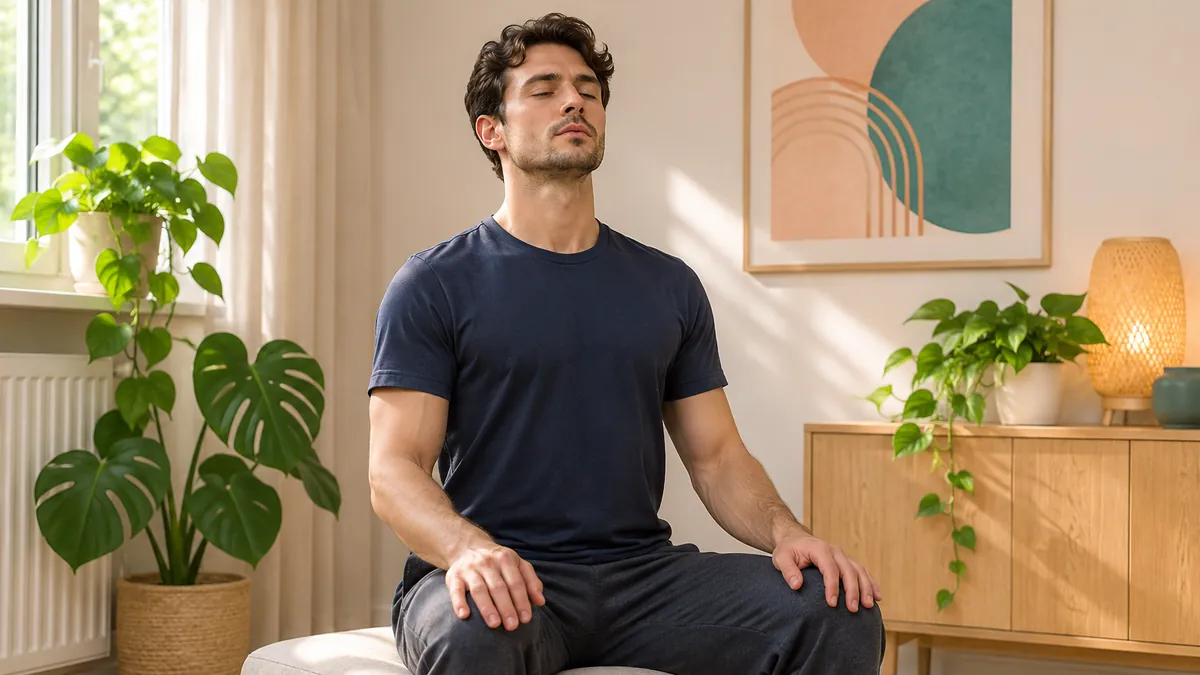
Learning how to control ejaculation with pelvic floor muscles is mostly about timing: noticing arousal early, easing off before the point of no return, and keeping the pelvic floor relaxed rather than clenched. Strength helps, but awareness and the ability to let go matter just as much.
Short answer: Train your pelvic floor to both squeeze and fully relax, use an arousal scale to slow down at about 6–7 out of 10, and practice with slow breathing. Studies suggest pelvic floor training may help some men, but it is not a guaranteed fix.
Why the Pelvic Floor Affects Ejaculation
Ejaculation happens in two phases. In the emission phase, semen moves into the urethra. In the expulsion phase, pelvic floor muscles, especially the bulbospongiosus, contract rhythmically to push it out.
The pelvic floor is the part of this reflex you can train voluntarily, and better control of it may help some men delay ejaculation. In a small 2014 study by Pastore and colleagues, most men with lifelong premature ejaculation gained some control after a 12-week supervised rehabilitation program. That program included biofeedback and electrical stimulation, not just home Kegels. See Do Kegels Help With Premature Ejaculation?.
The Point of No Return
Once emission starts, ejaculation follows within seconds and is very hard to stop. That moment is the "point of no return." Every control technique works before it, not at it. That is why squeezing hard at the last second rarely works.
Use an Arousal Scale
Rate arousal from 0 to 10, where 10 is ejaculation:
| Level | What it feels like | What to do |
|---|---|---|
| 0–3 | Calm to mild arousal | Keep going |
| 4–6 | Clear arousal, steady breathing | Notice your body, stay relaxed |
| 7 | Strong arousal, breathing speeds up | Slow down or pause |
| 8–9 | Close to the edge | Stop completely; it may already be too late |
| 10 | Ejaculation | — |
The skill is catching 6–7 reliably. Many men only notice 9 at first, so practice paying attention earlier.
Squeeze or Relax? Using Your Pelvic Floor in the Moment
- Relaxing is the default. Tension in the pelvic floor, buttocks, thighs and belly tends to push arousal higher. When you reach 6–7, exhale and consciously soften the pelvic floor, as in a reverse Kegel.
- A gentle squeeze is a tool some men use as a cue: one or two light contractions at 6–7, combined with slowing down, then a full release.
If squeezing makes you feel more tense or closer to the edge, skip it and rely on relaxation. A 2023 study that added sphincter control training, which focuses on awareness and relaxation of the pelvic sphincters, to the stop-start technique reported better results than stop-start alone, though it was not randomized. For a full comparison, read Kegel vs Reverse Kegel for Premature Ejaculation.
Breathing: The Simplest Lever
Fast breathing and breath-holding usually come with rising arousal. Slow breathing helps you stay mid-scale.
- Inhale through the nose for about 4 seconds, letting the belly expand.
- Exhale for about 6 seconds and let the pelvic floor soften.
- Keep the jaw and shoulders loose.
How to Control Ejaculation Mentally
Thinking of something unsexy often backfires, because you stop noticing your arousal. Instead:
- Stay present and track sensations, so you notice 6–7 in time.
- Reduce performance anxiety. Anxiety speeds things up for many men.
- Talk with your partner, so pausing feels normal rather than awkward.
If anxiety, relationship stress or past experiences play a big role, a sex therapist can help.
How to Control Ejaculation Naturally: A 4-Week Practice Plan
This is a general practice structure, not a clinical protocol.
| Week | Pelvic floor training (most days) | Arousal practice (2–3 times a week) |
|---|---|---|
| 1 | Find the muscles; short squeezes and full relaxation, a few minutes a day | Solo: rate arousal, no pauses needed |
| 2 | Add holds of a few seconds and quick squeezes; equal rest | Solo stop-start: pause at 7, 3–4 rounds |
| 3 | Add relaxation breathing after each set | Solo: pause at 6–7 using breathing and a soft release |
| 4 | Keep the routine; avoid adding many extra reps | With a partner: agreed pause signal, slow movement |
If you are unsure which muscles to use, start with How to Find Your Pelvic Floor Muscles. Stop and get assessed if training causes pain, urinary symptoms or a constant clenched feeling.
When to See a Doctor
See a urologist or sexual medicine clinician if premature ejaculation is new, happens with erection problems, pain or urinary symptoms, or affects your relationship or wellbeing. Mayo Clinic lists behavioral techniques, pelvic floor exercises, counseling and medication among treatment options.
Guided Timing for Squeeze and Release
Kegel Morse Hero turns pelvic floor training into Morse-code rhythms: a dot is a quick squeeze, a dash is a longer hold, and the gaps are full relaxation, with haptic cues so you can train discreetly. That makes it easier to practice both the squeeze and the release you need for control. It guides timing only; it does not measure muscle activity or treat premature ejaculation.
Frequently Asked Questions
Can you control ejaculation with pelvic floor muscles?
Some men can learn more control by training awareness, contraction and relaxation of the pelvic floor. Small studies suggest pelvic floor rehabilitation may help men with premature ejaculation, but results vary and protocols differ.
How to control ejaculation to last longer?
Combine an arousal scale, pausing at 6–7, slow breathing and a relaxed pelvic floor. Practice alone first, then with a partner.
Should I squeeze or relax to stop ejaculating?
Relaxing is usually the better default. A short, gentle squeeze can work as a cue for some men, but a hard clench at the last second rarely stops ejaculation.
How long does it take to learn ejaculation control?
Many men need several weeks of regular practice. The supervised program in the best-known study lasted 12 weeks.
This article is for general education and is not medical advice. If premature ejaculation is new, distressing or comes with pain or other symptoms, see a urologist, sexual medicine clinician or pelvic floor physical therapist.
Sources
- Pastore et al. 2014: Pelvic floor muscle rehabilitation for lifelong premature ejaculation
- Myers et al. 2019: Systematic review of PFMT for ED and PE
- Doğan and Keçe 2023: Stop-start technique vs stop-start plus sphincter control training
- NHS: Ejaculation problems
- Mayo Clinic: Premature ejaculation diagnosis and treatment