
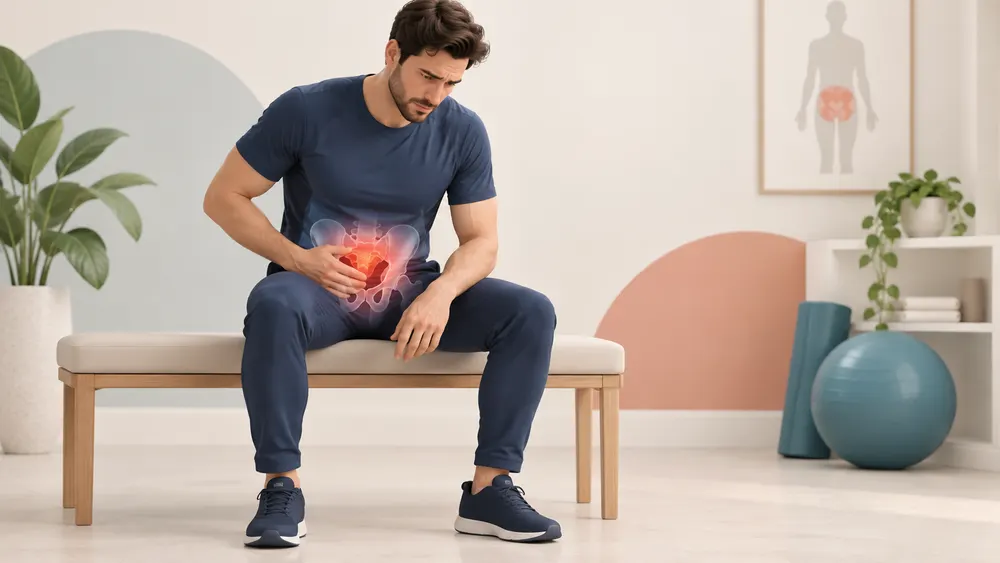
"Sperm cramps" is an informal internet term, not a recognized medical diagnosis. People usually use it to describe aching, pressure, cramping, or sharp pain during or after ejaculation.
The discomfort may be felt in the penis, testicles, perineum, pelvis, groin, or lower abdomen. Sperm itself does not cramp. The symptom can involve the prostate, urinary or reproductive tract, pelvic floor muscles, nerves, or other nearby structures.
Occasional mild discomfort may settle on its own, but repeated or severe pain should be evaluated rather than treated with random exercises.
Common Symptoms
People may describe:
- Burning or sharp pain during ejaculation
- A deep ache in the pelvis or perineum
- Testicular or groin discomfort
- Cramping after orgasm
- Pain when urinating
- Urinary urgency or difficulty emptying the bladder
The pattern, duration, and associated symptoms help a clinician narrow down the cause.
Prostatitis or Chronic Pelvic Pain Syndrome
Inflammation or pain associated with the prostate can cause discomfort in the perineum, penis, testicles, lower abdomen, or lower back. Some people also experience urinary symptoms or pain during or after ejaculation.
Not every case is caused by a bacterial infection. Chronic pelvic pain syndrome can involve muscle tension, nerve sensitivity, stress, and other factors.
Pelvic Floor Overactivity
The pelvic floor contracts during ejaculation and then needs to relax. Research has found that some men with chronic pelvic pain—particularly those with ejaculation-related pain—have difficulty returning these muscles to a relaxed state.
In this situation, repeatedly performing strong Kegels may increase tension. Treatment may focus on breathing, relaxation, manual therapy, coordination, and other techniques prescribed by a pelvic floor physiotherapist. See Can You Do Too Many Kegels? for more on overactive pelvic floors.
Epididymitis or Other Infection
Inflammation of the epididymis can cause testicular pain, tenderness, and swelling. Urinary tract infections and sexually transmitted infections can also contribute to genital or pelvic pain.
These conditions require medical evaluation and may need prescription treatment. Exercises cannot eliminate an infection.
Prostate or Pelvic Procedures
Surgery, radiation, or other treatment involving the prostate or pelvis may change sensation, ejaculation, or muscle function. Tell your treating clinician about new pain rather than trying to rehabilitate the area without guidance.
Hernia, Stones, or Other Conditions
Groin hernias, urinary stones, nerve problems, and other conditions may produce pain that becomes noticeable during sexual activity. A physical examination may be necessary to distinguish them.
Should You Do Kegels?
Kegels can help when weakness or poor activation is the problem. They are not an automatic treatment for pelvic pain.
If your pelvic floor is already tight, more contractions may increase pain or make relaxation more difficult. Do not begin an intensive strengthening program until a professional has assessed whether you need strengthening, relaxation, or both.
What You Can Do While Arranging Care
For mild symptoms without warning signs:
- Pause activities that clearly trigger pain
- Avoid prolonged clenching of the pelvic floor
- Use slow diaphragmatic breathing and allow the lower abdomen to soften
- Apply comfortable warmth to the pelvic area
- Record when the pain occurs and any urinary or sexual symptoms
Over-the-counter pain medication may not be appropriate for everyone. Follow the label and ask a pharmacist or clinician if you take other medication, have kidney disease, ulcers, bleeding risk, or another relevant condition.
Do not self-treat with leftover antibiotics.
When to Contact a Doctor
Arrange a medical assessment if pain is recurring, persistent, worsening, or affecting sexual activity. A primary-care clinician or urologist may ask about urinary symptoms, sexual history, medication, recent procedures, and possible infection.
Seek urgent care for:
- Sudden severe testicular pain
- Significant swelling or redness
- Fever, chills, or vomiting
- Blood in urine or semen
- Inability to urinate
- Pain following a significant injury
Final Thoughts
Pain after ejaculation is real, but "sperm cramps" is too vague to explain its cause. Prostatitis, infection, pelvic floor overactivity, and other conditions can produce similar symptoms.
The most important point is that pain does not always mean the pelvic floor is weak. Stronger Kegels may be the wrong solution when the muscles cannot relax. Persistent symptoms deserve proper evaluation and an individualized plan.
This article provides general information and cannot diagnose the cause of pelvic or testicular pain.