
A strong core is useful for far more than visible abdominal definition. The core helps stabilize the spine and pelvis while you walk, lift, run, exercise, and perform everyday tasks.
It includes the abdominal wall, back muscles, diaphragm, hip muscles, and pelvic floor. These structures need to coordinate rather than remain tightly braced all day.
The following exercises can be performed at home with minimal equipment. Move slowly, breathe normally, and choose the easier variation whenever you lose control.
1. Forearm Plank
The plank trains the abdominal wall, shoulders, back, and glutes to resist unwanted movement.
Place your forearms on the floor with elbows under the shoulders. Extend your legs and support yourself on your toes. Keep a straight line from your head to your heels. Exhale gently and tighten your abdomen without holding your breath. Hold for 10–30 seconds.
Complete 2–3 controlled sets. Beginners can keep their knees on the floor. Avoid dropping the hips, lifting them excessively, or forcing a long hold after your form breaks down.
2. Dead Bug
The dead bug develops trunk control while the arms and legs move independently.
Lie on your back with your arms above your chest. Lift your legs so the hips and knees are bent to approximately 90 degrees. Keep your lower back comfortably supported. Slowly lower one arm and the opposite leg. Return to the start and switch sides.
Perform 6–10 repetitions per side. Avoid moving quickly or allowing the lower back to arch sharply.
3. Bird Dog
The bird dog challenges balance and strengthens the back, abdominals, shoulders, and glutes.
Begin on your hands and knees. Place your hands beneath your shoulders and knees beneath your hips. Extend one arm forward and the opposite leg backward. Keep the hips and shoulders level. Pause, return slowly, and change sides.
Perform 8–10 repetitions per side. Avoid twisting the pelvis or lifting the leg higher than you can control.
4. Glute Bridge
The bridge trains the glutes and hamstrings while the trunk stabilizes the pelvis.
Lie on your back with your knees bent and feet flat. Exhale and press through your heels. Lift your hips until your body forms a comfortable line from shoulders to knees. Pause for two seconds, then lower slowly.
Perform 10–15 repetitions. Avoid overarching the lower back or pushing through the toes.
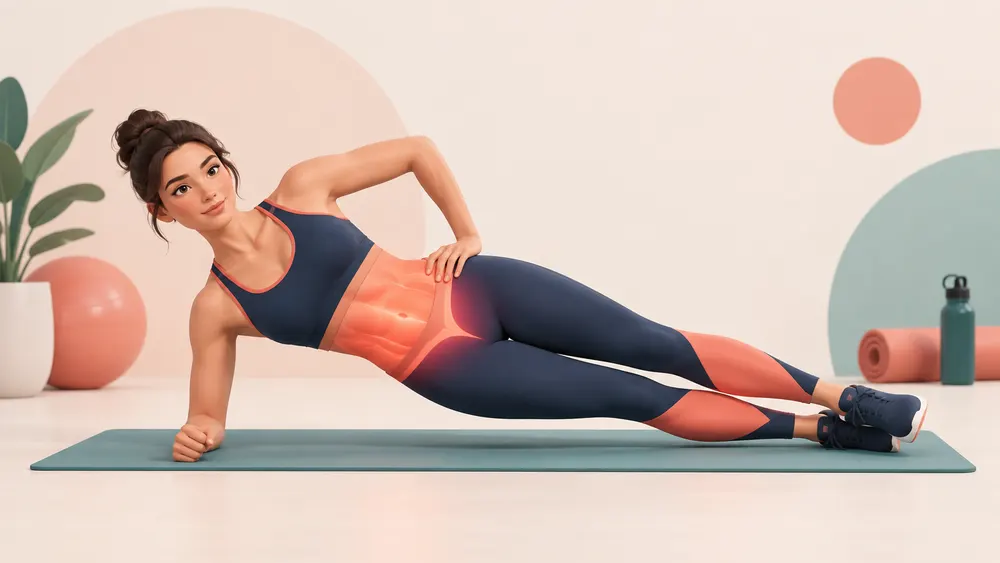
5. Modified Side Plank
The side plank targets the obliques and lateral hip muscles.
Lie on your side with your elbow under your shoulder. Bend your knees for the beginner variation. Lift your hips while keeping the head, ribs, and pelvis aligned. Hold for 10–20 seconds, then repeat on the other side.
As you become stronger, straighten the legs.
6. Heel Slides
Heel slides are a gentle option for learning abdominal control.
Lie on your back with both knees bent. Exhale and gently engage the lower abdomen. Slide one heel away without allowing the pelvis to rotate. Bring the heel back and switch sides.
Perform 8–12 repetitions per side.
7. Pelvic Floor Contractions
The pelvic floor is part of the core, but it should not remain contracted during every exercise.
Imagine stopping urine and gas at the same time. Feel a gentle squeeze and lift. Hold for three seconds while breathing normally. Relax fully for at least three seconds. Repeat 5–8 times.
Do not routinely practise while urinating. If contractions cause pelvic pain or make it difficult to relax, stop and consult a pelvic floor physiotherapist.
A Simple 15-Minute Routine
Complete two rounds:
- Forearm plank: 20 seconds
- Dead bug: 8 repetitions per side
- Bird dog: 8 repetitions per side
- Glute bridge: 12 repetitions
- Modified side plank: 15 seconds per side
- Heel slides: 10 repetitions per side
- Pelvic floor contractions: 5 slow repetitions
Rest for 30–60 seconds between exercises when needed.
Form and Safety Tips
- Exhale during the most difficult part of each movement
- Stop a set when you can no longer maintain control
- Progress duration or repetitions gradually
- Choose pain-free ranges of motion
- Do not constantly pull the stomach inward or clench the pelvic floor
Seek professional advice if exercise causes pelvic heaviness, urinary leakage that is worsening, abdominal bulging after pregnancy, or persistent back or pelvic pain.
Final Thoughts
Effective core training is not about punishing abdominal workouts. It is about building coordination between the trunk, hips, breathing muscles, and pelvic floor. Consistent, well-controlled sessions can create a stronger foundation for sport and everyday movement.
People who are pregnant, newly postpartum, recovering from surgery, or managing pelvic floor symptoms may need individualized exercise guidance.